
Lower back pain (LBP) affects millions across the UK, and recent research is gradually refining how we understand it. What was once often described by patients as permanent “disc damage” is increasingly understood, in many cases, as part of a process that can show elements of regeneration and adaptation, observed through imaging, molecular biology, and biomechanics. In many people, symptoms can improve over time without surgery. At FLOW OSTEO every treatment aims to reflect this developing science: combining gentle manual therapy, movement, and education to support your spine in returning toward a more comfortable balance.

How Disc Injuries Really Happen
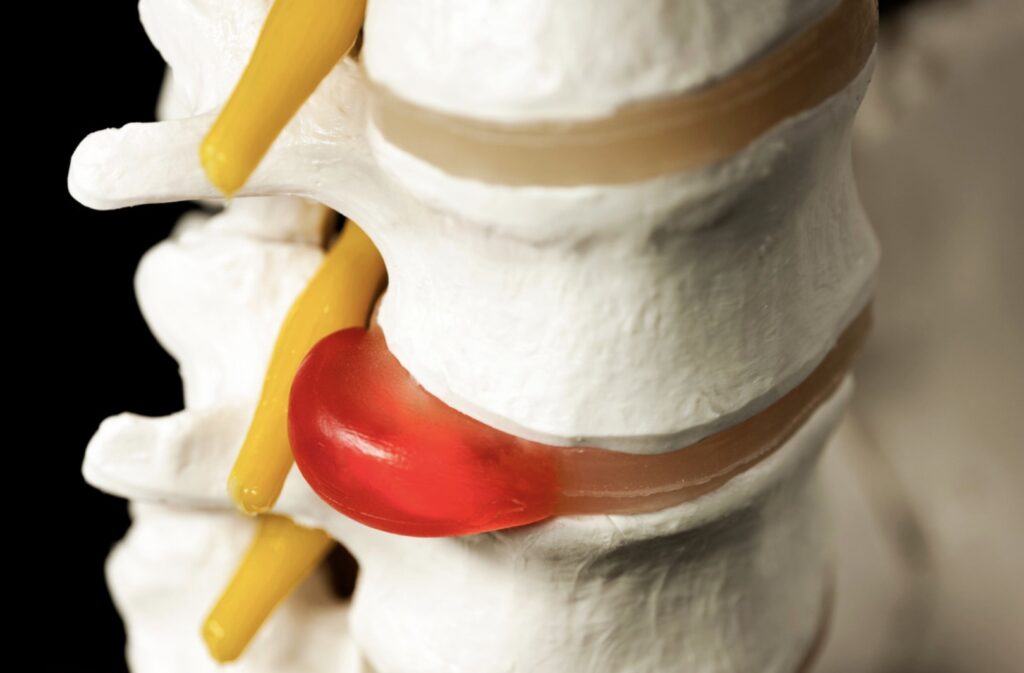
Your spine’s discs act as shock absorbers, cushioning the vertebrae with a gel-like core (the nucleus pulposus) surrounded by a ring of fibres (the annulus fibrosus). Over time, sustained sitting, repetitive lifting, or twisting put uneven strain on these discs. Tiny cracks can form in the annulus, allowing tissue from the core to push outward.
Recent analyses have shown that symptoms of disc injury – stiffness, pain, and nerve irritation – arise not only from mechanical compression but also from inflammation and sensitisation of nerve roots, associated with cytokines such as TNFα and IL6. This suggests that back pain in the context of disc problems may stem from a combination of mechanical factors and biological responses, rather than from “wear and tear” alone.
When mechanical loading becomes too repetitive or too heavy, the disc’s ability to manage stress can falter. The L4–L5 and L5–S1 levels take the brunt of this because they absorb the greatest torque during sitting, bending, and driving, movements most people repeat countless times a day.
Your Body’s Built-In Repair System
The encouraging truth from recent reviews is that many disc herniations improve without surgery. Once disc tissue extends beyond its usual boundary, the body’s immune system may begin a process known as resorption: macrophages migrate to the area, break down the extruded material, and help resolve inflammation. Some studies suggest that a substantial proportion of herniated disc material can be reabsorbed within months in many patients, although the exact percentage and timeframe vary between individuals and studies.
At the same time, fibroblasts and new small blood vessels work to restore tissue integrity. Disc herniation, therefore, is not just an injury; it can be understood as a dynamic process in which both injury and repair are occurring. Movement and appropriate loading appear to play an important role in supporting this process for many people.

Why Movement, Not Complete Rest, Supports Recovery
In the past, people with back pain were often advised to rest extensively, but more recent guidance suggests that prolonged rest can delay recovery for many cases of non-specific and disc related low back pain. Controlled movement can help reduce inflammation, improve circulation to the tissues, and reintroduce tolerable mechanical loading, all of which may support your body’s repair mechanisms.
Studies have demonstrated that targeted exercise such as Pilates, Tai Chi, and low-load stabilisation can improve pain and function in people with low back pain. These approaches are thought to help by improving muscular control and confidence with movement, and by providing gentle mechanical loading to the spine. It is not just the muscles that may benefit; gentle, graded stress can help maintain the spine’s micro environment, including tissue nutrition, collagen alignment, and hydration. However, the specific type and dose of exercise that will be most suitable can differ between individuals, so programmes should be tailored.

An Osteopathic Approach to Disc-Related Low Back Pain
At FLOW OSTEO the approach is rooted in both osteopathic reasoning and current medical science. The guiding principle is simple: movement can act like medicine when it is introduced at the right time, in the right way, for the individual in front of us.
During an assessment, mechanical patterns such as pelvic tilt, lumbar stiffness, or muscular imbalance are evaluated to explore why a particular disc region might be overloaded. Treatment then aims to restore motion through manual therapy, soft tissue techniques, and joint articulation — working to improve comfort in overloaded segments while supporting neuromuscular control. Hands-on treatment is used alongside advice and exercise and is not presented as a cure for disc herniation but as one part of a broader management plan.
Individualised movement guidance follows to reinforce changes between sessions. These exercises are designed to be consistent with current evidence based principles, including those set out in national guidelines for musculoskeletal and low back pain care, which emphasise activity, education, and shared decision making. Where appropriate, we also discuss when medical imaging or onward referral to other healthcare professionals may be indicated, in line with expectations for safe, responsible communication.
Seeing Pain Differently
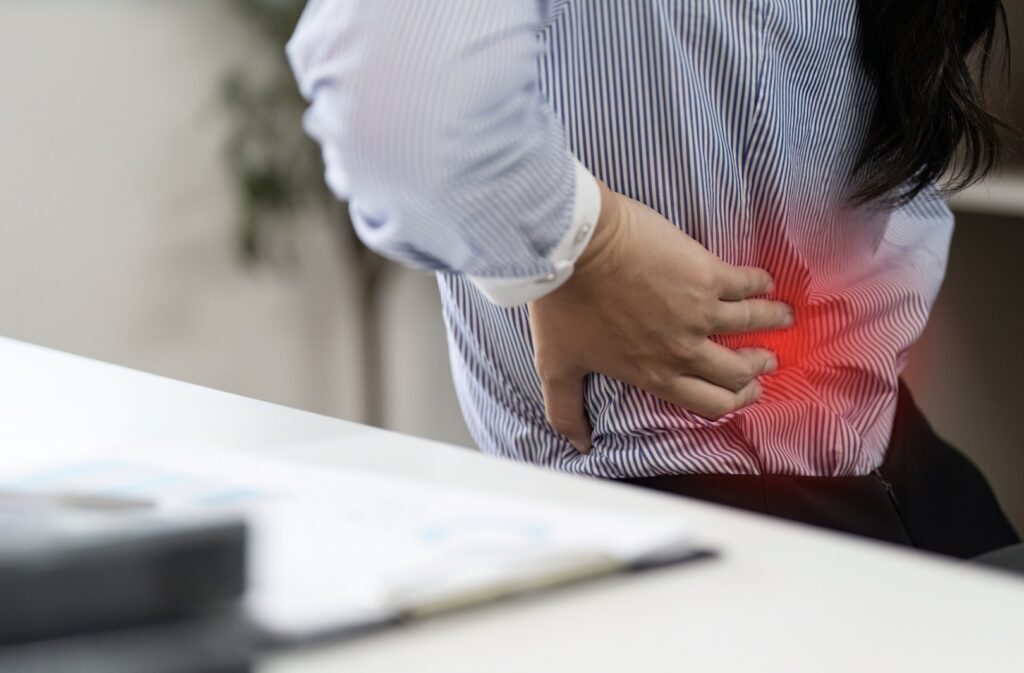
Pain should not be seen purely as a sign of damage but can often be understood as a protective signal from your body, indicating that movement, posture, or load exposure may need recalibration. The same inflammatory processes that can contribute to pain are also involved in initiating repair. Osteopathic care aims to support your body’s own capacity for recovery by improving circulation, restoring joint mechanics, and helping you manage stress responses through education and appropriate movement.
This shift in perspective moves the emphasis from solely “managing” chronic pain to supporting active recovery where possible. It is about empowering you to understand how your spine may heal, and how daily choices – posture, ergonomics, activity levels, sleep, and stress – feed into that process. At the same time, it recognises that some people will continue to experience persistent pain and may need a combination of approaches, including input from their GP or other specialists.

Restoring Flow, Naturally
If back pain is keeping you from moving as you would like, you do not have to live restricted or fearful. For many people, symptoms can improve over time, and a combination of self-management strategies and professional support can help you navigate that journey. Inflammation can settle; movement and confidence can return.
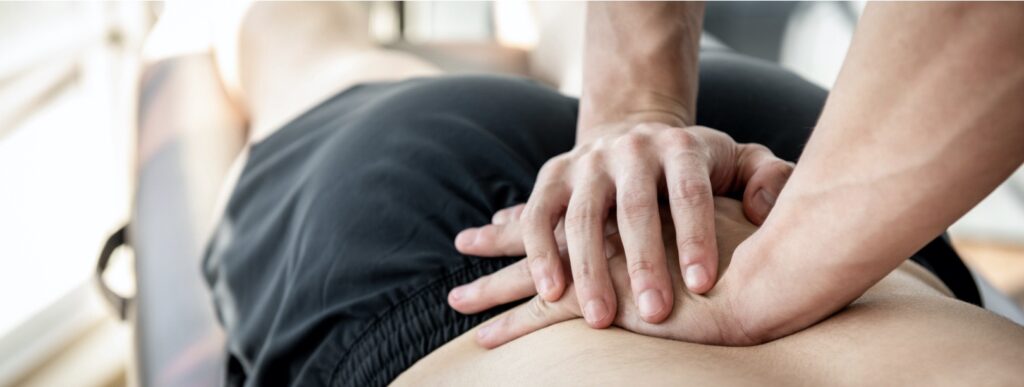
At FLOW you will find space, time, and professional guidance to better understand your spine and support it in recovering as naturally as possible. Not through force, but through precision, aligning osteopathic care with the best available evidence while staying clear and realistic about what that evidence shows. Your body has significant capacity to adapt and recover, and our role is to help create the right conditions and, where needed, signpost you towards additional investigations or treatments in a transparent, ethical way.
References
StatPearls. “Lumbar Disc Herniation.” National Center for Biotechnology Information, 2023.
Hao, Y., et al. “Prevalence, Clinical Predictors, and Mechanisms of Resorption in Lumbar Disc Herniation: A Systematic Review.” Orthopaedic Reviews, 2024.
Zeng, Z., et al. “Lumbar Disc Herniation Reabsorption: A Review of Clinical Evidence, Biological Mechanisms, and Influencing Factors.” Frontiers in Medicine, 2025.
Wang, X., et al. “Clinical effects and biological mechanisms of exercise on lumbar disc health.” Frontiers in Physiology, 2024.
Penchev P, Ilyov IG, Todorov T, et al. Comprehensive analysis of treatment approaches for lumbar disc herniation: a systematic review. Cureus. 2024;16(8):e67312.
Wang, Z., et al. “Exercise prescription for improving chronic low back pain: A network meta-analysis of randomised controlled trials.” Medicine, 2025.