In our last blog, we looked at the connections between the neck muscles and the dura (the myo-dural bridge) and how they might help explain some stubborn headaches. This next step is about how that same area links into a specific diagnosis: cervicogenic headache.

What is a cervicogenic headache?
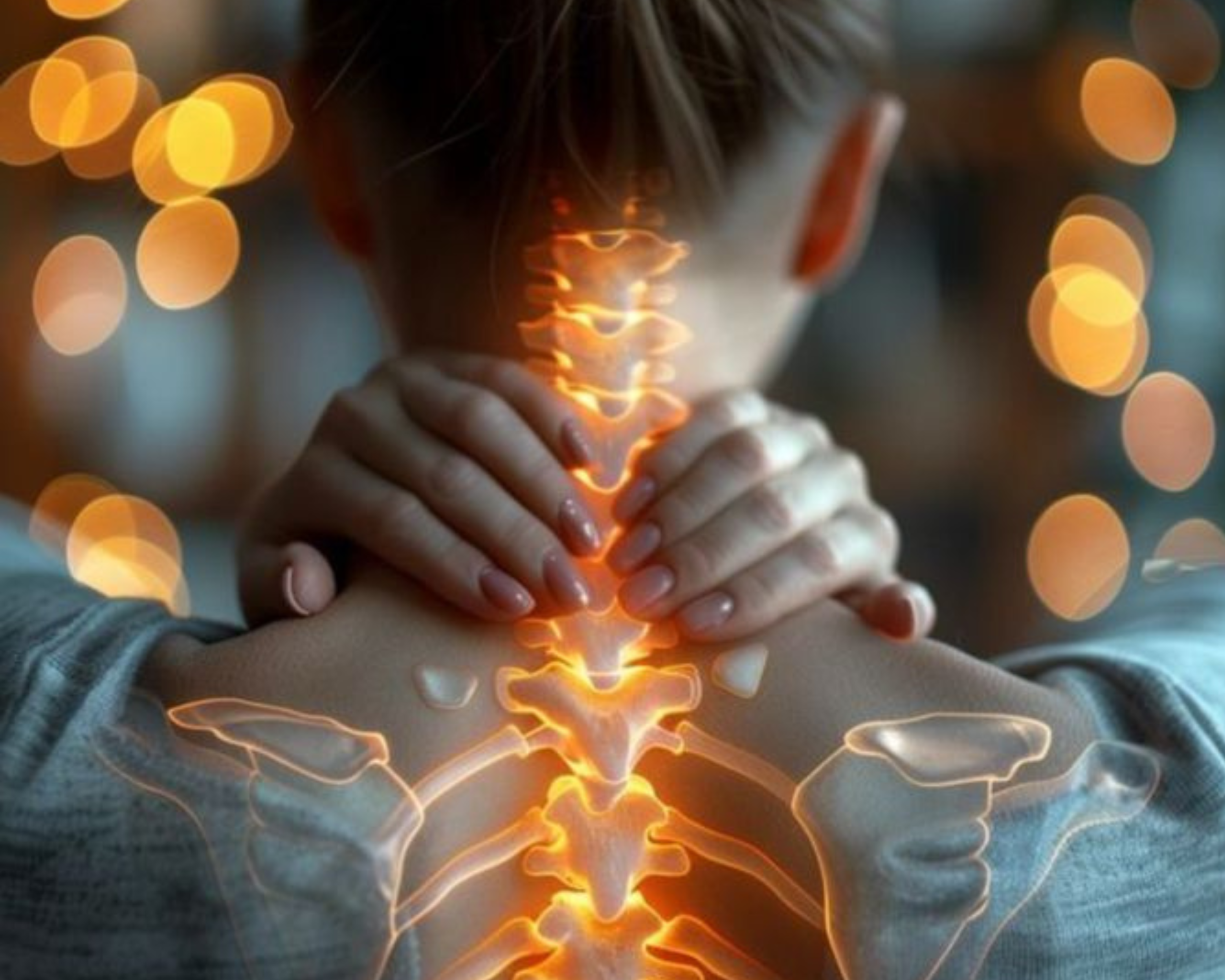
A cervicogenic headache is a headache that is thought to arise from problems in the neck, rather than from the head itself. Pain is often felt on one side, usually starting in the back of the head or upper neck and sometimes spreading to the temple, forehead or around the eye.
People often describe:
- Headache that is clearly linked to neck movement or posture (for example, working at a computer, driving, looking up).
- Tenderness or stiffness in the upper neck and under the base of the skull.
- A sense that “it starts in my neck and climbs up into my head”.
In this picture, the neck structures – joints, discs, muscles and their coverings – send pain signals into the nervous system, and the brain “feels” them as a headache.
Where the myo-dural bridge fits in
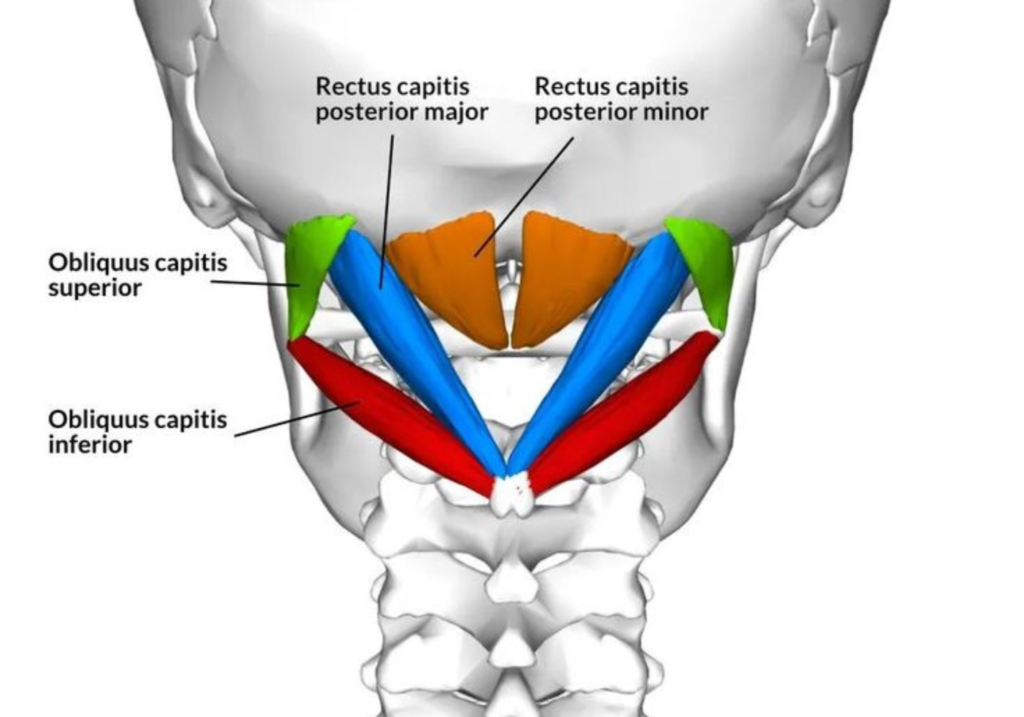
The myo-dural bridge is a small but important structure. It is made of connective tissue that links some of the deep muscles under the back of the skull to the outer covering of the spinal cord (the dura) in the upper neck. Because the dura is sensitive to pain, any extra pull, stiffness or irritation in this area has the potential to trigger or maintain head pain.
Recent research suggests three key ideas:
- If the myo-dural bridge becomes thicker and more fibrotic, it can change how forces are transmitted to the dura.
- This altered pull on the dura may irritate pain‑sensing nerves and, over time, help drive ongoing headache‑like behaviour (shown in animal models).
- Differences in how these bridges are built from person to person might help explain why some people with neck issues develop headaches and others do not.
So, rather than the myo-dural bridge being “the” cause of cervicogenic headache, it looks more like one possible link in the chain between neck problems and head pain.

How this might feel day to day
If the myo-dural bridge and upper neck are involved, people may notice patterns like:
- Headache that ramps up after long periods of sitting with the head forwards, or after looking up or turning the head repeatedly.
- A feeling of tightness, pulling or deep ache right under the base of the skull, sometimes with sharp twinges when moving a certain way.
- Pressing on the small muscles at the top of the neck can sometimes reproduce or worsen the familiar headache pattern.
These patterns are not unique to myo-dural bridge involvement, but they fit with the idea that movement and muscle tension at the top of the neck can influence pain‑sensitive tissues around the spinal cord.
What the studies actually show – in simple terms
1. Experimental work on the myo-dural bridge
One research team created changes in the myo-dural bridge of rats that resemble scarring or thickening. They then watched how the animals behaved and examined their nervous systems.
They found that:
- The treated animals developed clear structural changes in the myo-dural bridge area.
- These animals showed more “headache‑like” behaviours than untreated animals, suggesting ongoing discomfort.
- Brain areas involved in pain processing showed chemical changes that fit with a state of increased sensitivity.
This does not prove that the same thing happens in humans, but it shows that altering the myo-dural bridge alone can be enough to trigger persistent, headache‑style pain signals in a living system.
2. Anatomy of the suboccipital myo-dural bridge
Another group studied the myo-dural bridge in human foetuses. They described different patterns of connective tissue between the deep neck muscles and the dura.
They noticed that:
- Some bridges were thicker, others thinner, and the way they attached varied.
- Near the dura, the fibres often became more spread out and wrapped around small veins.
- The tissue did not contain elastic fibres, suggesting it does not spring back easily.
From this, they suggested that in newborns, these bridges may not yet be very strong at transmitting force. As we grow, these structures may change and become more mechanically important – and individual differences in shape and strength might influence who is more prone to certain neck‑related headaches later in life.
3. Chronic cervicogenic headache: a broader view
A review paper brought together what is known about long‑lasting cervicogenic headaches. It discussed how continuous input from neck structures can lower pain thresholds and maintain a headache over time.
Within this bigger picture, the myo-dural bridge is presented as one potential contributor, especially in people with clear upper neck involvement, such as:
- Persistent neck ache and stiffness.
- Headaches strongly linked to neck movements.
- Reproduction of their typical headache when the upper neck area is pressed or stressed.
What this means (and does not mean) for you
What it may mean:
- Your neck really can be part of your headache story. For some people, small but important structures like the myo-dural bridge might be involved in maintaining pain.
- Paying attention to posture, movement habits and upper neck comfort is worthwhile if your headaches seem to start or worsen there.
- Gentle, targeted approaches that aim to improve neck movement, reduce muscle tension and support better control of the deep neck muscles may help reduce the load on sensitive tissues.
What it does not mean:
- Not all headaches coming from the neck are due to the myo-dural bridge. It is one possible piece of a complex puzzle, not the whole picture.
- These studies do not say that every cervicogenic headache is caused by scarring or damage in this structure. Many factors – joints, muscles, nerves and how the nervous system processes pain – likely work together.
- A diagnosis of cervicogenic headache should always be made by a suitably qualified healthcare professional who can rule out other, more serious causes of head pain.
If you recognise yourself in this description, it may be helpful to discuss your symptoms with a clinician who understands both headaches and neck function. They can assess whether your pattern fits a cervicogenic type of headache and suggests an individual plan that may include education, movement, manual therapy, and exercises.
Limitations of the current research
It is important to be honest about what we do and do not know yet.
- The experimental work on the myo-dural bridge was carried out in rats. Animals are useful models, but they are not humans, and we cannot assume that the same changes and behaviours occur in people in exactly the same way. The changes were also created using a chemical, which is not how problems usually develop in real life.
- The detailed anatomical study was performed on foetuses, not living adults. It tells us a lot about structure, but very little about how these tissues behave under real‑world loads in an upright, moving person.
- The review of chronic cervicogenic headache pulls together existing studies, but much of the evidence is indirect. It supports the idea that the neck – including the upper neck and its soft tissues – can drive chronic headache, but it does not pinpoint the myo-dural bridge as a proven main culprit.
In short, these studies strengthen the case that the neck–dura connection is relevant for some headaches. More research is needed before we can say exactly how often, and in whom, the myo-dural bridge is a key player.
References
Zhang L, Song Y, Yu S, et al. Evidence for chronic headaches induced by pathological changes of myo-dural bridge complex. Scientific Reports. 2024;14:5285.
Kitamura K, Cho KH, Yamamoto M, Ishii M, Rodriguez‑Vazquez JF, Murakami G, Abe S. Suboccipital myo-dural bridges revisited: Application to cervicogenic headaches. Clinical Anatomy. 2019;32(7):1015–1024.
Fursule D, Garg K. Research progress of chronic cervicogenic headache. TMR Non‑Pharmacotherapy. 2021;5(4):215–224.