
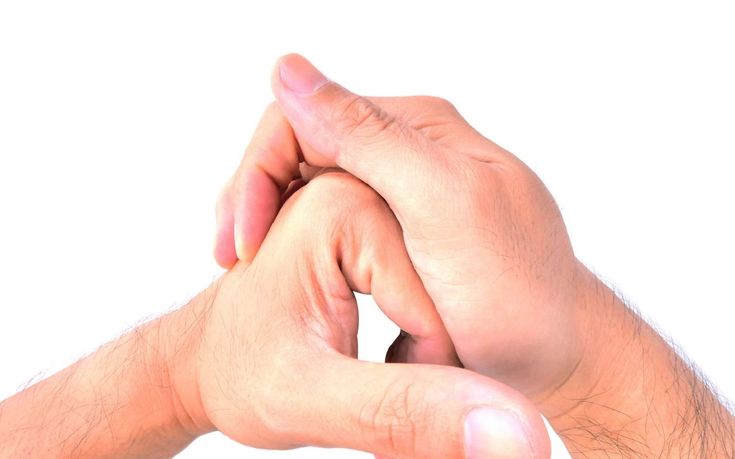
You may have heard a click or crack during osteopathic treatment and wondered what is actually going on. The techniques that can create this sound is called high‑velocity, low‑amplitude thrust (HVLAT).
High‑velocity, low‑amplitude thrust (HVLAT) describes a manipulative procedure where a joint is brought near the end of its passive range and a rapid, small‑amplitude thrust is delivered in a controlled direction. Literature describes HVLAT as aiming to produce separation or “gapping” of synovial joint surfaces in a precise, mechanically efficient way, rather than as a large or forceful movement.
How HVLAT is done
Harwich’s work looks at how HVLAT is described in the research and builds a simple model of what the practitioner is trying to do with their hands.
In plain English, a good HVLAT:
- Starts with careful positioning of the joint.
- Uses a tiny, rapid movement rather than a big push.
- Aims to create a brief “gap” between the joint surfaces, instead of just twisting the joint around.
You can think of it like this: the practitioner sets the joint up in a very specific way, then applies a small, quick movement so the joint surfaces momentarily separate. The technique is about being precise, not about forcing the joint through a large range of motion. Harwich’s model stays focused on how the joint moves; it does not promise particular results for every person.
What might be happening when it cracks
Kawchuk and colleagues used real‑time MRI to watch what happens inside finger joints when they crack. In their study, the finger was gently pulled while an MRI scanner took rapid images.
They found that at the moment of the crack:
- The joint surfaces moved apart quickly.
- A small dark space appeared between them on the scan, which they interpreted as a gas bubble in the joint fluid.
- That bubble stayed visible for a while after the sound and did not suddenly collapse at the same moment as the crack.
From this, they suggested that the sound is linked to a bubble forming in the joint fluid as the joint surfaces separate, rather than a bubble bursting. Their study was on finger joints in one person under experimental conditions and did not look at spinal techniques or treatment results, so it cannot, by itself, explain everything that happens in the neck or back. It does, however, give a useful picture of one physical event that can occur when a joint cracks.

Why osteopaths may use HVLAT
HVLAT can be described as a precise hands‑on technique designed to create a brief, controlled separation of the joint surfaces, with the aim of restoring easier movement in that particular joint. Sometimes this is accompanied by a crack, which seems to be related to a small gas bubble appearing in the joint fluid.
Important points for patients:
- HVLAT is one possible option among many (such as softer mobilisations, soft‑tissue techniques, movement and exercise advice).
- The presence or absence of a crack or popping sound is not a reliable sign of how effective the treatment is.
- The technique should only be used when there is a clear clinical reason, after a proper history and examination.
What you should know about HVLAT
- HVLAT is a powerful technique
It is a quick, small, controlled movement applied to a joint, and some people find it can ease stiffness or pain when it is used appropriately as part of a treatment. It is not a “party trick” and should only be used when there is a clear clinical reason. - You always have the right to say no
Full, informed consent means the practitioner explains what they want to do, why they think it might help, what the possible risks and alternatives are, and checks that you genuinely agree. You can change your mind or say no at any time. - Choose your practitioner carefully
Look for someone registered with their professional body, who takes a proper history, examines you, and only suggests HVLAT when it is clearly appropriate.

What good communication looks like
- Clear explanation in simple language
They should explain the technique in plain English: what they will do, what you might feel, and that a “crack” is a normal, physical sound. - Checking in when they cannot see your face
During HVLAT, practitioners sometimes work behind you or at the side of the table, so they cannot always see your expression clearly. That is one reason you may see large mirrors in treatment rooms – they help the practitioner keep an eye on how you are responding. They should also use their voice: asking how you feel, checking you are comfortable, and pausing if you sound unsure. - You are part of the process
A professional but approachable practitioner will invite questions, listen to your concerns, and adapt the treatment plan around you. HVLAT should feel like something you are choosing to do together, not something that is “done” to you.
Simple takeaway for patients
If you are considering HVLAT, think of it as one useful tool in a larger treatment toolbox. Make sure you understand what it is, why it is being suggested, and that you feel able to stop or change the plan at any time. A good osteopath or manual therapist will be happy to explain, adjust, or skip the technique completely if you are not comfortable with it.
References
Harwich, T. (2017). Joint manipulation: Toward a general theory of high‑velocity, low‑amplitude thrust techniques. Journal of Chiropractic Humanities, 24, 26–35.
Kawchuk, G. N., Fryer, J., Jaremko, J. L., Zeng, H., Rowe, L., & Thompson, R. (2015). Real‑time visualization of joint cavitation. PLOS ONE, 10(4), e0119470.