There’s a moment in football that every fan knows. It doesn’t happen on the pitch. It happens in a living room, a pub, a school playground the next morning. It’s the retelling. The slow‑motion replay in someone’s own words. Football does that; it gives people something to talk about that isn’t work, or weather, or worry.
It’s one of the most loved sports in this country for a reason. And something is shifting. Women’s football isn’t just growing; it’s changing who the game belongs to. Kids who never saw themselves in a footballer now do. That matters more than any league table.
The World Cup is happening right now. June 2026. Forty‑eight nations. And as always, before the glory, there is loss.
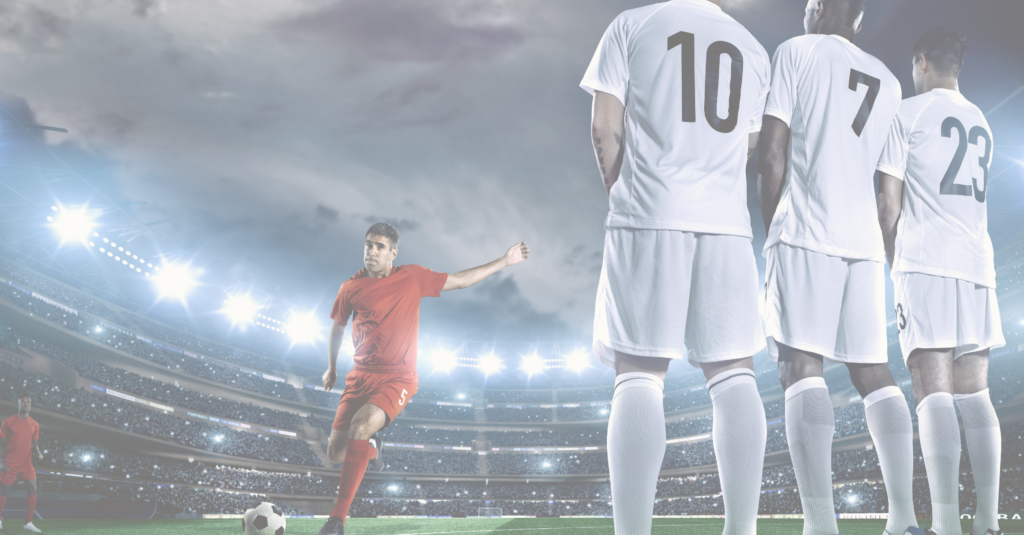
Elite footballers competing at this World Cup don’t just train hard, they train within a carefully planned load management system designed to protect them from injury.
Before a match, they complete a structured RAMP warm‑up protocol (Raise, Activate, Mobilise, Potentiate): graduated cardiovascular work, dynamic mobilisation, neuromuscular activation drills, and sport‑specific acceleration sequences, all timed to the minute under warm‑up protocols.
Their training week sits inside periodisation: a structured microcycle built around recovery, acquisition, and tapering phases, managed through GPS and accelerometer data that tracks every sprint, deceleration, change of direction, and PlayerLoad value in real time. Tools like Catapult and Firstbeat generate Acute: Chronic Workload Ratio (ACWR) alerts “when a player’s load trends into higher‑risk territory rather than staying in a stable zone”.
After matches, they enter a structured recovery architecture: selectively applied cold water immersion and contrast therapy, compression garments, nutritional timing windows, soft tissue work from an on‑site physiotherapy team, and sleep optimisation protocols.
Their bodies are not surprised by load. Every tissue, tendon, muscle, joint, has been gradually prepared, monitored, and supported through recovery. And they still get injured. Hugo Ekitike. Patrick Agyemang. Edson Alvarez. Ankle surgeries. Ruptured tendons. Months of preparation, gone.
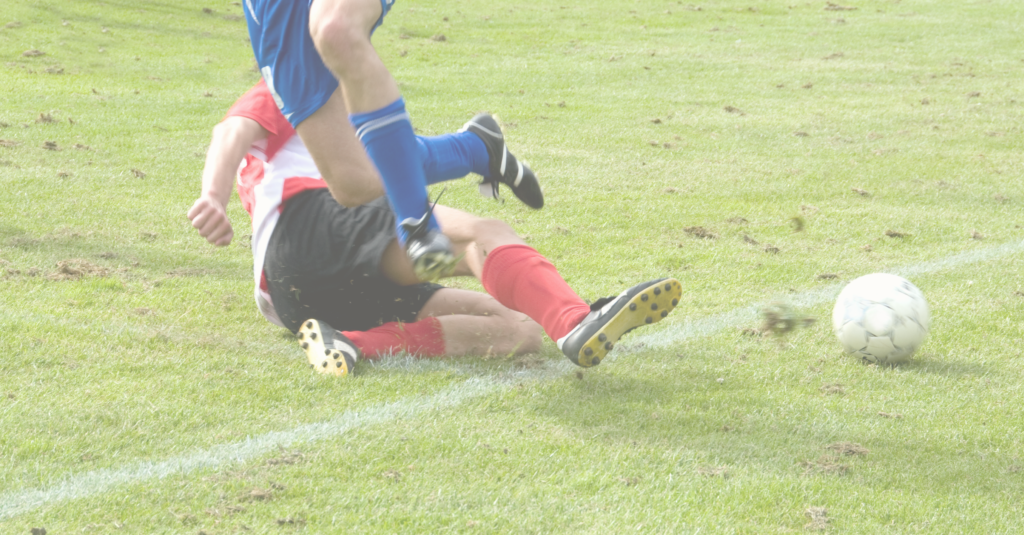
Now think about the person in the office.
They’ve been at their desk since nine. Sitting. Or standing at a standing desk, which sounds better but is still just static load in a different position. Seven, eight, nine hours. Hips flexed, ankles in one position. Calves shortening. The whole posterior chain stiffening.
Half six arrives and they lace up their boots. Five‑a‑side. Or they pull on their trainers and head out for a run. Because they want to be healthy. Because they enjoy it. Because it’s the one hour of the day that’s theirs.
There is some or no warm‑up. There is no transition. There is no therapist checking whether their ankle can do what they’re about to ask it to do. There is just cold tissue meeting explosive demand and a body that has been asked to go from zero to sprint without “gradual preparation”.
Here is what those hours at a desk can do to the lower limb.
Prolonged static posture tightens the posterior chain. These structures don’t just feel tight. They become “less comfortable under load, and slower to absorb force effectively”.
The ankle barely moves at the same time. And when the ankle stops moving properly, something specific happens inside the joint. The fibula loses its normal gliding motion at two small but critical joints: the proximal and distal tibiofibular joints. When those joints stiffen, dorsiflexion is restricted. And dorsiflexion is not optional. It is the fundamental movement behind walking, running, squatting, climbing stairs, and kicking a ball.
So the body finds another way. The foot pronates. The Achilles tendon can begin to load unevenly. The knee can start to rotate inward. The hip compensates. A chain reaction emerges over time, often unnoticed; most people only discover it when something finally gives way.
Multiply this across three evenings a week. Forty‑eight weeks a year. Add no preparation. Then add explosive sport: a match.
The football did not break you. The office fed the pattern. The football just made it impossible to ignore.
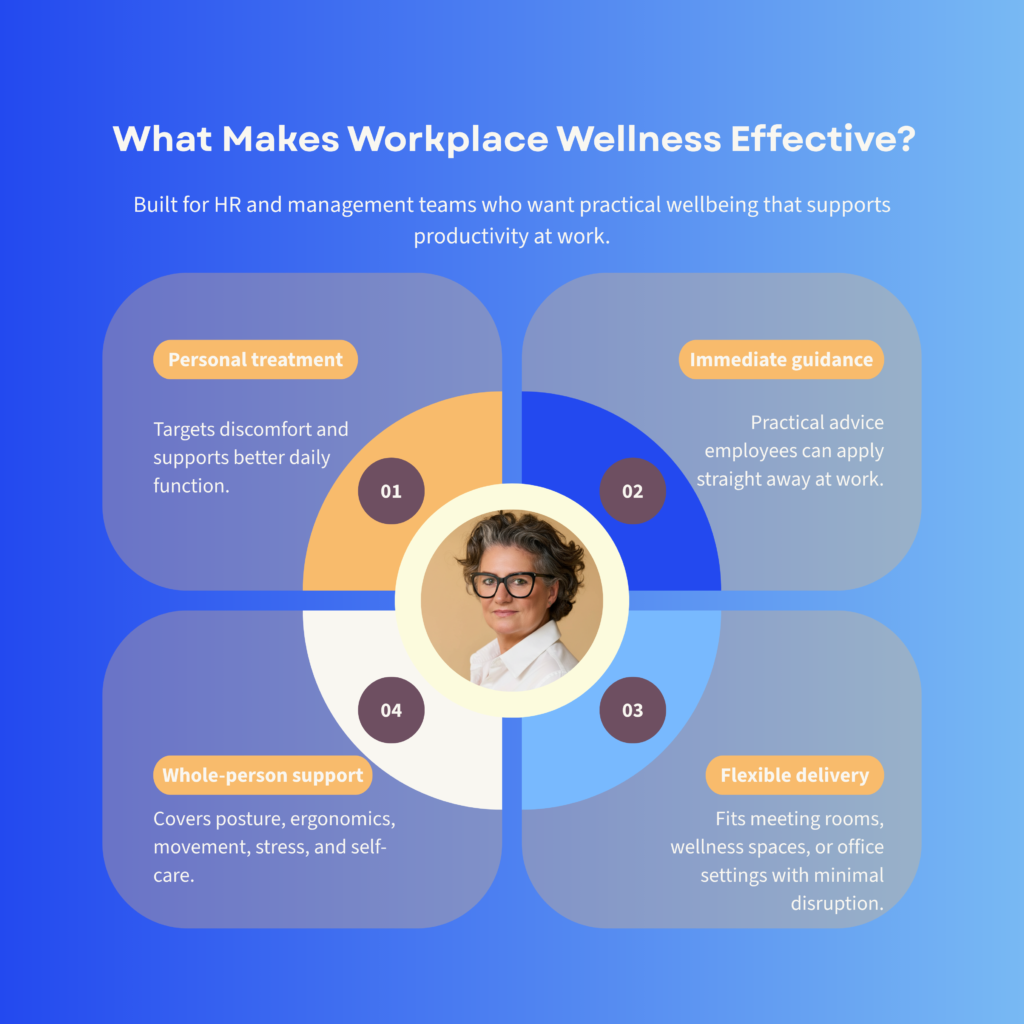
The story inside that pattern is where WOW days at FLOW OSTEO begin.
A day of on‑site osteopathic care steps into the gap between the office chair and the five‑a‑side pitch, between the spreadsheet and the sprint.
An osteopath sits with people at their workplace and listens to the way their job lives in their body: the ankle that never quite recovered, the knee that complains on the stairs, the hip that tightens after lunch.
Hands‑on treatment works alongside clear, grounded advice about warm‑up, load, and recovery, so that the next match, run, or gym session lands on joints and tissues that have actually been prepared.
Teams start to see that injuries are not just bad luck on a Tuesday night. They are often the final chapter of a story that began under fluorescent lights, with a laptop and a static posture.
WOW days change that story.
The office becomes a place where bodies are checked, joints are moved, tissues are cared for, and future games are protected.
The World Cup will move on. The highlight reels will fade. The office will still be there.
A WOW day makes sure the next goal, the next run, the next season does not arrive on a body that has been quietly breaking at its desk.