
The Science of Sedentary Life and Respiratory Health
Although we often associate desk jobs with stiff necks and sore backs, research increasingly suggests that prolonged sitting can also influence how we breathe. This affects oxygen intake, influences energy levels, focus, and wellbeing throughout the workday. FLOW OSTEO uses scientific evidence to inform practical strategies that aim to help organisations reduce some of these risks through our Workplace Wellness Day programmes.
What science says

Sitting Time and Lung Function
A 2024 observational study examined computer‑using adults and found that longer daily sitting time was associated with significant differences in lung function measures across sitting‑time groups. Researchers measured key respiratory markers- including forced vital capacity (FVC), forced expiratory volume in one second (FEV1) and peak expiratory flow (PEF) – and reported that these values differed between people who sat for shorter versus longer periods, suggesting that prolonged sitting may adversely affect aspects of lung function.
In simple terms, the longer you sit, the more likely it is that your breathing mechanics and lung function will change, at least in the short term. The study and related research highlighted that sub‑optimal seated posture is thought to compress the diaphragm and rib cage, which may reduce breathing depth and gas exchange and could, over time, influence how energised and focused you feel at work.
Manual Therapy and Immediate Breathing Changes
Hands‑on care may offer some support.
A 2024 Scientific Reports trial in healthy, sedentary young adults investigated the immediate effects of a single manual therapy session on respiratory function. The authors reported a significant improvement in peak expiratory flow (PEF) after manual therapy compared with control, while changes in other spirometry measures, such as FVC and FEV1, were not statistically significant between groups.
However, this study only assessed immediate effects in a controlled setting and did not follow participants over time, so it cannot tell us how long any benefits last or how they translate into day‑to‑day work performance. The authors emphasised the need for further research, including studies that consider ongoing posture and activity patterns. Regular movement, awareness, and appropriate intervention are key.
Every Workplace Wellness Day is led by a registered osteopath at FLOW OSTEO. The on‑site sessions bring education to help teams breathe, sit, and move better, drawing on this emerging evidence while remaining tailored to individual needs and workplace context.

Breathing Exercises at Work
A 2023 peer‑reviewed perspective article summarised evidence that regular deep breathing practice can reduce blood pressure and stress markers and proposed that the workplace is a promising setting for such interventions. The authors argued that integrating brief, structured breathing exercises into the workday may support cardiometabolic and respiratory health, although most available data come from short‑term studies outside office environments.
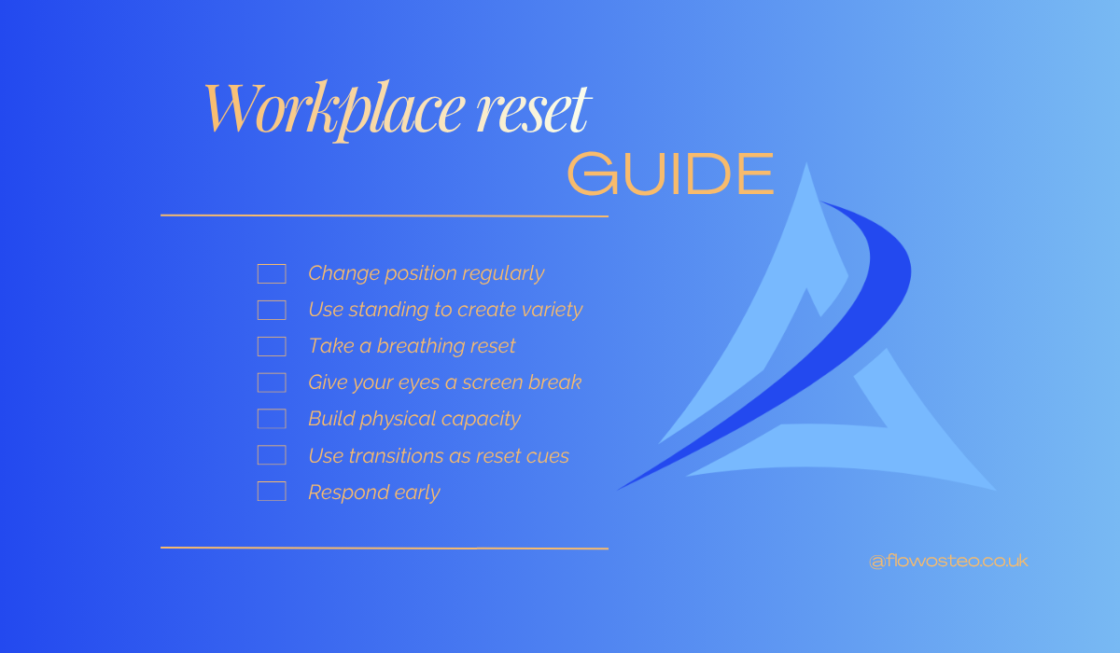
Even short “breathing resets” throughout the day can help you focus on posture, encourage fuller breaths, and support feelings of calm and alertness for some individuals. The study authors encouraged employers to consider structured breathing breaks and workplace wellness sessions as a potential way to support long‑term respiratory and cardiovascular health, while noting that more workplace‑specific trials are still needed.
How FLOW OSTEO Turns Research into Results
Growing evidence suggests that long hours at your desk are associated with measurable changes in breathing and lung function. However, with the right intervention, you may be able to support healthier breathing patterns and mitigate some of these effects.
Our Workplace Wellness Day programmes bring professional osteopaths directly to your workplace to deliver:
- On‑site sessions targeting postural restriction and chest tightness that may influence breathing comfort and efficiency.
- Guided one-to one breathing sessions based on research‑backed techniques designed to be simple, accessible, and adaptable to different job roles.
- Education helping staff understand how muscle tension, posture, and breathing interact, so they can make informed decisions about their own health at work.
- Compliant, fully regulated care managed seamlessly for HR departments.
When employees breathe better, they may feel calmer and more focused, which can support how they perform at work.
References
Upmanyu A, Kumar A, Kalia V (2024). Influence of Sitting Time on Pulmonary Function in Healthy Adults. PMC (PubMed Central).
Immediate Effects of Manual Therapy on Respiratory Function in Sedentary Young Adults. (2024). Scientific Reports (Nature).
Deep Breathing Exercise at Work: Potential Applications for Cardiometabolic and Respiratory Health. (2023). PMC (PubMed Central).