Many women are told that how they feel during their cycle is a matter of motivation or willpower, when in reality their bodies are responding to real hormonal shifts that can influence energy, mood, sleep, and exercise performance. Understanding these patterns can help you recognise that feeling unusually strong one week and more fatigued the next is not a personal failing, but often a normal physiological response.
Hormones such as oestrogen and progesterone rise and fall across the menstrual cycle, affecting factors like body temperature, fluid balance, pain sensitivity, and how your muscles use energy. By learning how these changes may interact with your training, you can plan movement that feels more supportive and sustainable, rather than forcing yourself into a rigid routine that ignores how your body actually feels.
This guide offers science‑informed suggestions to help you experiment with your training across different phases of your cycle while maintaining a compassionate, realistic approach to performance and recovery. It is not about perfection or “hacking” your hormones, but about giving you practical options so you can work with your body, not against it.
Research into how the menstrual cycle influences exercise responses is still evolving, and findings are mixed. The suggestions below are intended as general options rather than strict rules, and it is important to experiment and notice what feels best for you.
Menses Phase (Period Days)
Physiology: Oestrogen and progesterone are at their lowest; for many people, low hormone levels and menstrual blood loss can be associated with increased fatigue, and high‑intensity training may feel more challenging at this time.
Recommended Exercises: Many people choose to focus on recovery, gentle movement, and mind–body activities.
Examples: Yoga, Pilates, low-intensity walking, stretching routines.
Why: These exercises require less cardiovascular and muscular demand, aid circulation, and help manage discomfort or cramps without overloading the body. Some studies suggest that yoga and stretching may help to ease menstrual symptoms and support psychological wellbeing.

Follicular Phase (Post-Period, Days 6–14)
Physiology: Rising oestrogen may contribute to improved energy, slight gains in strength for some individuals, and better exercise tolerance.
Recommended Exercises: Begin to increase intensity and strength focus, but not to maximum.
Examples: Mixed cardio (cycling, running), strength training at moderate loads, HIIT circuits at moderate level, bodyweight resistance exercises, swimming.
Why: The body may be more responsive to muscle-building stimuli; energy and endurance often feel as though they improve, supporting a slightly higher training stimulus. Moderate to rising oestrogen is thought to aid muscle recovery and adaptation. Some research reports changes in energy expenditure and intake across the cycle.
Luteal Phase (Days 15–28)
Physiology: Both oestrogen and progesterone are generally higher; some studies have observed changes in strength, endurance, and energy expenditure across the cycle. Body mass may fluctuate slightly due to changes in fluid balance rather than true fat or muscle loss.
Recommended Exercises: This phase can be one option for scheduling more demanding strength or endurance sessions if you feel well, but it does not need to be the only time you train hard.
Examples: Heavy resistance training (compound lifts: squats, deadlifts, bench press), interval training, long runs or cycle rides, team sports, power-based classes, advanced Pilates.
Why: Hormonal patterns in this phase are proposed to support muscle growth, strength, and aerobic adaptation in some individuals. Rather than assuming that the luteal phase is always “best”, it may be more helpful to notice when you personally feel strongest and plan some of your challenging sessions around those times.
Premenstrual Phase (End of Cycle, Days 25–28)
Physiology: Oestrogen and progesterone rapidly decline; symptoms of fatigue, mood changes, and PMS are common for many, but not all, people who menstruate.
Recommended Exercises: It is often helpful to be flexible, and many people choose to scale back intensity and prioritise flexibility and light activity.
Examples: Stretching, gentle yoga flows, easy walking, restorative Pilates, flexibility classes.
Why: Lower hormone levels can coincide with reduced energy—gentle activity supports recovery, manages fluid retention, and may help to lessen PMS symptoms in some studies, although individual responses differ. Avoid setting expectations to push for personal bests or heavy loads if symptoms are bothersome; focus on maintaining movement and mental health.
Evidence-Based Rationale
Current research suggests that average differences in exercise performance across the menstrual cycle are generally small and sometimes inconsistent, and people vary widely in how they feel and perform. The recommendations above are grounded in the hormonal drivers of exercise response: rising oestrogen is thought to improve recovery and endurance for some individuals; higher oestrogen and progesterone in the luteal phase have been linked to changes in muscle adaptation and metabolism in certain studies; the low-hormone phases may benefit from gentler activity to manage symptoms and enable recovery.
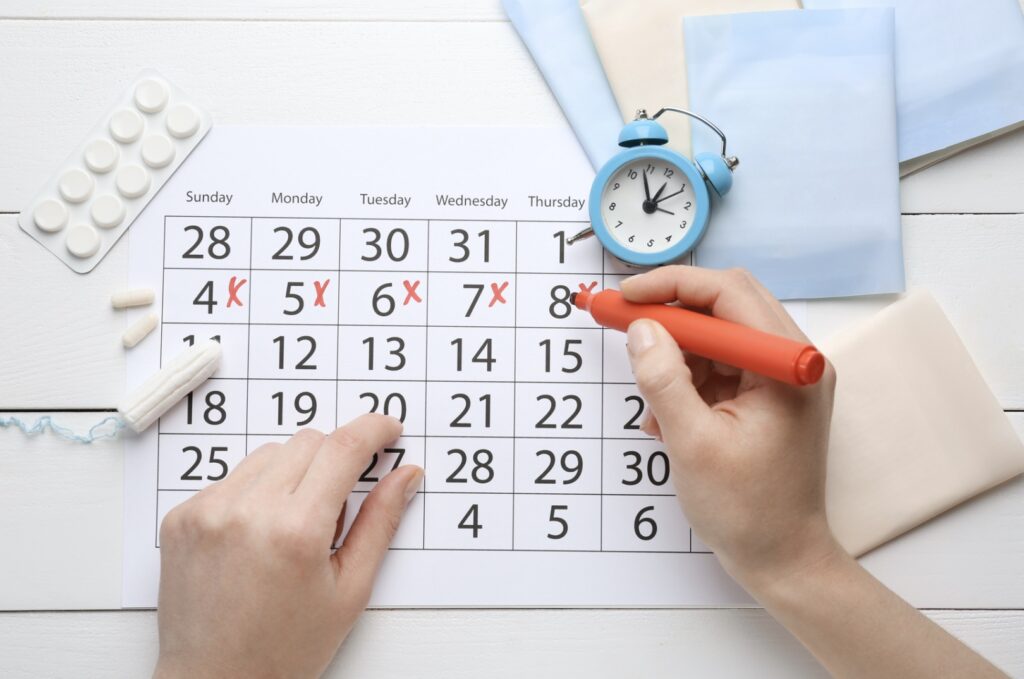
While individual cycles vary, tracking symptoms, exercise tolerance, and using apps or thermometer strips can help align routines to hormonal changes. Paying attention to your own patterns-rather than strictly following a calendar-is likely to be more useful than rigid “cycle syncing”.
Tailoring—versus rigid syncing—is supported by research for potentially improved exercise comfort, greater perceived performance, and better mental health, especially when adapting to phase-specific energy and symptoms. However, the evidence base is still developing, and these suggestions should be viewed as flexible guidelines to help you experiment safely, not as prescriptive rules that will apply in the same way to everyone.
Reference:
Tailoring fitness workouts to your menstrual cycle” by Dan Gordon, Chloe French, and Jonathan Melville, Anglia Ruskin University, published 2022-12-01