
Neck pain is one of the most common, and most under-addressed, drivers of musculoskeletal (MSK) absenteeism and “presenteeism” in office-based teams. Employees rarely take a full sick day for neck discomfort; instead, they show up, work through pain, lose focus, and become less productive. HR and wellbeing leads managing MSK-driven absence need a clear answer: what actually works, and how quickly?
A newly published randomised controlled trial gives a genuinely useful, evidence-based answer with some important points HR teams should understand before rolling anything out.
Researchers ran a trial on 90 adults with non-specific chronic neck pain, the kind seen daily in desk-based teams, without a specific structural diagnosis. Participants were split into three groups over one month of treatment (10 sessions):
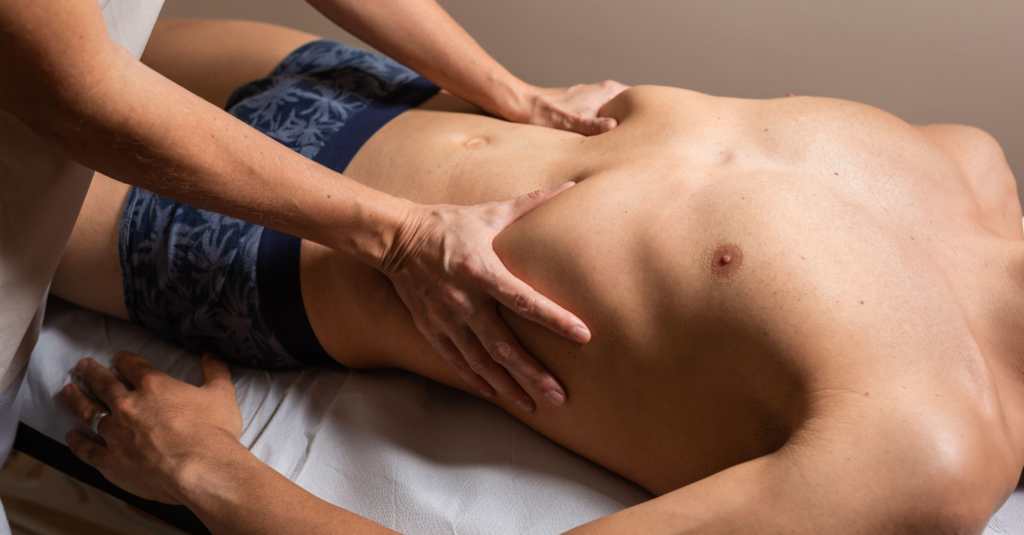
– Cervical spine manual therapy plus diaphragm manual therapy plus breathing re-education exercises
– Cervical spine manual therapy plus a sham (placebo) diaphragm treatment
– Conventional physiotherapy alone
What the Data Showed
The combined approach (manual therapy plus breathing re-education) produced meaningfully lower pain scores than conventional physiotherapy at one month, and the improvement held at the four-month follow-up. It also outperformed cervical manual therapy alone, though by a smaller margin – roughly 0.4 points on a 0-to-10 pain scale.
On disability (Neck Disability Index), the combined group and the cervical-manual-therapy-only group improved by similar amounts, both meaningfully better than conventional physiotherapy. In other words, adding breathing re-education sharpened pain relief, but the disability improvement was largely driven by the manual therapy component, not the breathing work in isolation.
Where breathing re-education showed its clearest, most consistent advantage was in respiratory function measures; the combined group significantly outperformed both other groups on every respiratory-related outcome, at both one and four months.

Limitations to Keep in View
This trial does not show that breathing exercises alone reduce neck pain or disability. It shows that breathing re-education, layered onto manual therapy, adds measurable extra pain relief and clear respiratory benefits but the disability gains track with the manual therapy, not the breathing component by itself. Any internal wellbeing communication should reflect this nuance rather than implying breathing drills are a standalone cure.
Why This Matters for HR Strategy
Non-specific chronic neck pain is exactly the profile HR teams see repeatedly in DSE (display screen equipment) risk assessments and occupational health referrals, no red flags, no structural diagnosis, just persistent discomfort tied to posture and workload.
– Interventions combining hands-on care with breathing re-education show durable pain improvement at four months, not just an immediate post-session effect.
– The respiratory-function gains are relevant to desk workers, since chronic neck pain is frequently associated with dysfunctional (shallow, upper-chest dominant) breathing patterns that manual therapy alone does not fully correct.
What This Means in Practice
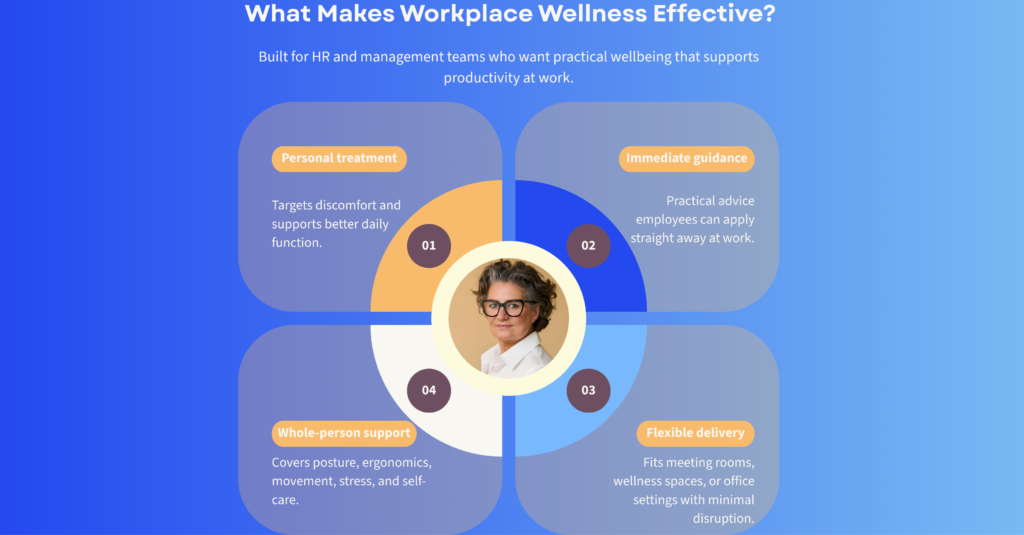
The evidence supports positioning breathing re-education as a ‘complement’ to hands-on therapy or physiotherapy care for neck-related discomfort, not as a replacement for manual assessment and treatment.
The practical takeaway is to evaluate on-site or referral pathways that include both a manual therapy component and breathing re-education, and to expect the clearest early wins in pain reduction and breathing-pattern correction while treating discomfort and functional improvement as more closely tied to the manual therapy itself.
Source: Tatsios PI, Grammatopoulou E, Dimitriadis Z, Koumantakis GA. “The Effectiveness of Cervical Spine and Diaphragm Manual Therapy Combined with Breathing Re-Education Exercises on Musculoskeletal, Respiratory and Psychophysiological Outcomes in Patients with Non-Specific Chronic Neck Pain: A Randomized Controlled Trial.” Journal of Clinical Medicine. 2026;15(11):4266.